Under construction
Portal to Marchantia plant-related resources - arising from work at Jim Haseloff's lab at the University of Cambridge
Marchantia: a simple platform for plant bioengineering
Plant systems are characterised by complex genetic and cellular networks that are locked together by dynamic, parallel and non-linear feedback interactions that give rise to self-organised growth, repair and propagation. These evolved systems pose formidable barriers to traditional engineering approaches. Yet, the challenge is compelling. Plants are self-assembling bioreactors fed off sun and solutes. Plant reprogramming offers new prospects for low-cost and large-scale production of engineered molecules.
The non-vascular plant Marchantia polymorpha has morphological simplicity, simple underlying genome structure and ease of culture, transformation and analysis. These properties make it an ideal system for experiments in plant development and synthetic biology.
In our lab at the University of Cambridge, we have been developing tools and resources that make advanced work with Marchantia ever more accessible. With my retirement, and closing down of our well-resourced laboratory, I am tackling the challenge of developing small-scale and cheap techniques for bioengineering - exploiting the experimental simplicity of the Marchantia system and development of table-top devices and instrumentation using easily available commodity components. The aim is to produce open, shared designs that could be used in education, community labs and research.
Jim Haseloff (@jimhaseloff.bsky.social)
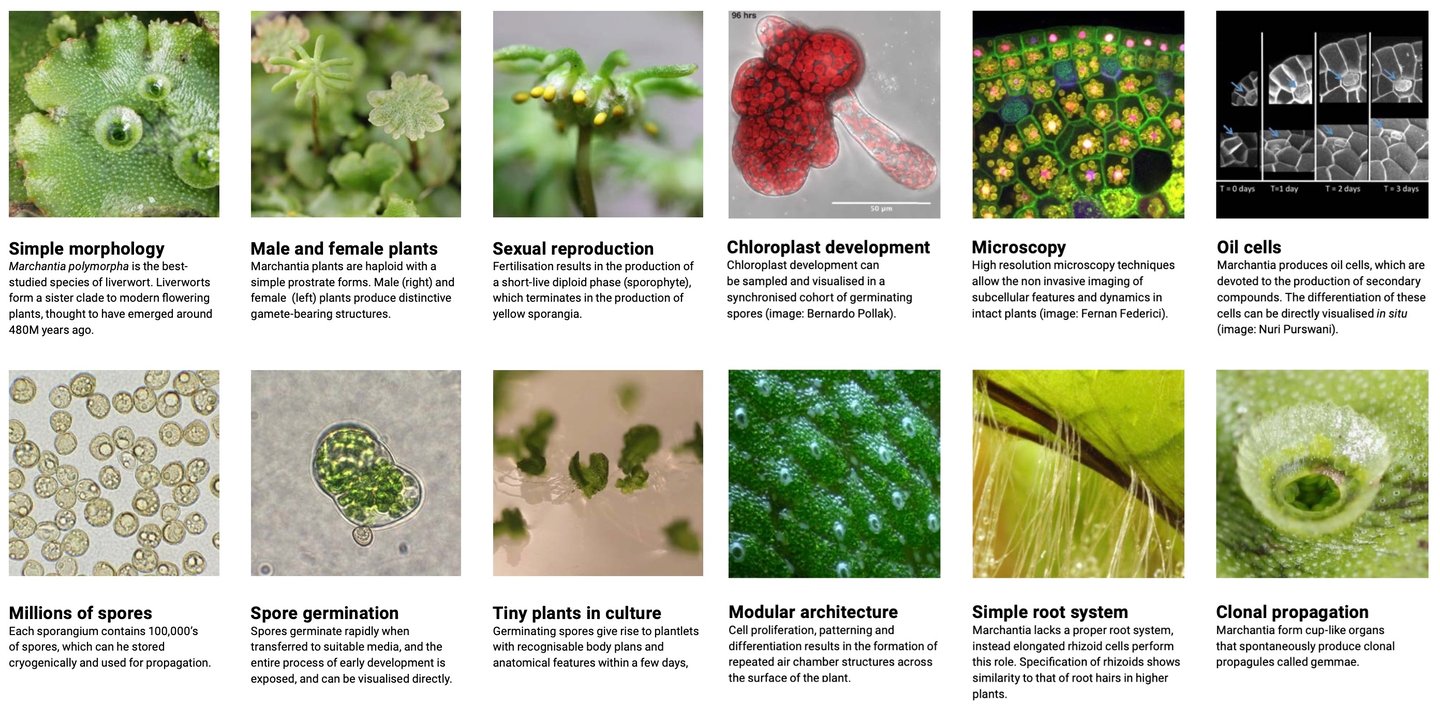
Features of Marchantia as an experimental system
New stuff
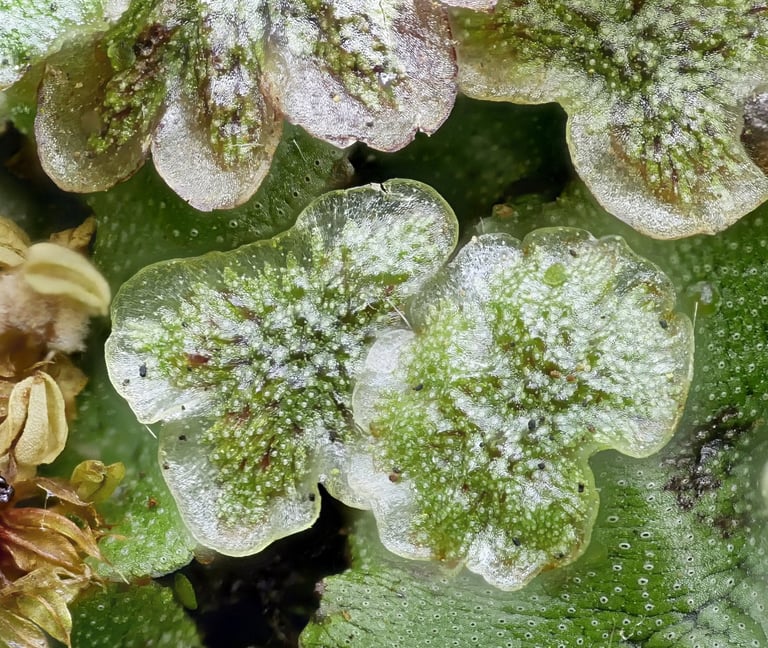
Hydroponics for Marchantia
Instructions for DIY assembly of different size modular hydroponic systems (grow-pods) with self-contained systems for nutrient media circulation, custom growing surfaces, and multispectral LED units for simple, tabletop propagation of Marchantia.
Particle inflow apparatus
Progress in designing and building a low-cost, low-pressure particle inflow gene gun for chloroplast transformation
Macrophotography tips
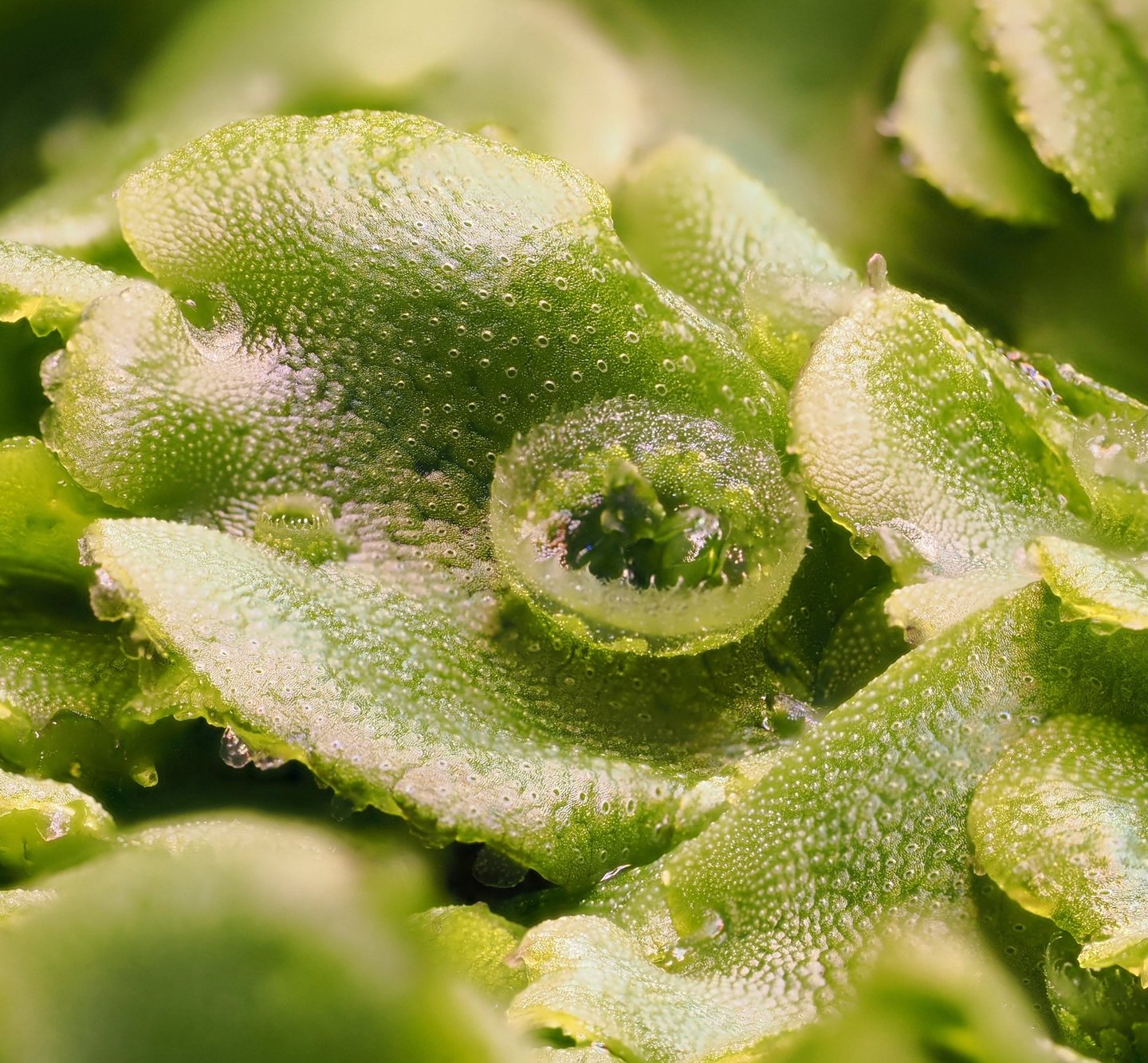
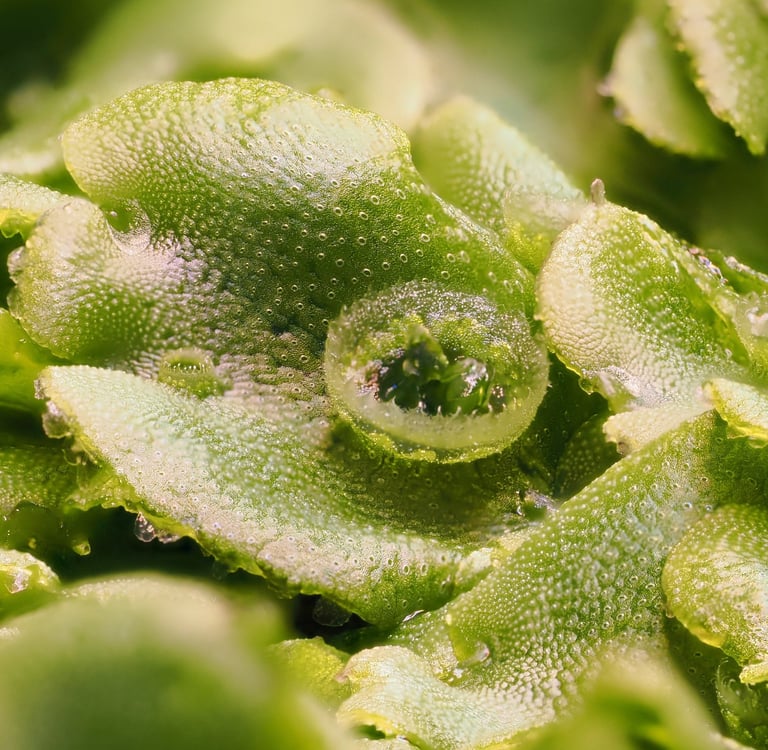
Practical tips for macrophotography of Marchantia and microenvironment, using extended focus techniques.
Biomaker tools enable new approaches in simple biological systems
The marchantia.org describes ways of working with the simple liverwort plant, Marchantia polymorpha, which has unusual features, some thought to be shared with early evolved terrestrial plants. The properties of this new model organism make it ideal for experiments in DNA reprogramming and engineering. There has been a parallel development of new resources for 3D printing, commodity electronics and visual programming which enable the design and building of advanced instrumentation for quantitative biology and control systems. These are described at the sister website biomaker.org, and the low-cost tools provide new opportunities for democratising biological science and engineering. Hand-in hand, the pairing of simple, fast biological systems like Marchantia with cheap instrumentation will make sophisticated research approaches more accessible for global schools, community labs and hobbyists. See the sister Biomaker website for more information.


Easy-to-build programmable bioinstrumentation on a 'sister' website
Sharing open tools for bioengineering


Building low-cost bioinstrumentation


Related resources for Marchantia research


Archive of lab resources
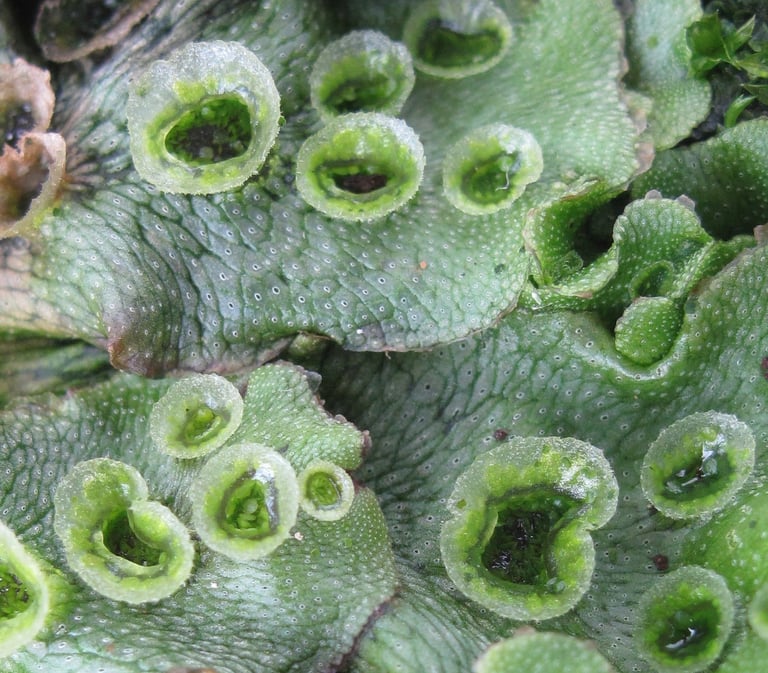
Publications
Research publications from the Haseloff Lab at the University of Cambridge. Contain relevant technical background and experimental details.
Marchantia as a platform for engineering plants
About Biomaker OpenPlant Cambridge Lab
Jim Haseloff
jimhaseloff@gmail.com

